Home › Asphalt Pathways, Sidewalks, and Trails
Precision Asphalt Reno installs asphalt pathway paving in Reno, NV for parks, schools, campuses, and communities. We build multi use trails, walking paths, and asphalt sidewalks with gentle slopes and smooth joints for accessibility. Our crews follow planned alignments and drainage requirements to create safe, long lasting routes. Reach out for help designing and paving your next path or trail project.
Precision Asphalt Reno provides professional asphalt pathway paving throughout Reno, NV, Nevada and the surrounding area. Our licensed, insured crew delivers safe, clean, on-time work with a free estimate before anything begins. Call (775) 370-7037 or request your free quote.
Asphalt Pathway Paving for Reno Properties
Asphalt pathways, sidewalks, and small trails are different from roads and parking lots. They are narrower, often wind through tighter spaces, and need to feel comfortable underfoot as well as hold up to weather and light vehicle traffic. At Precision Asphalt Reno, we build these paths to match how people really use them around homes, HOAs, parks, schools, and commercial sites across Reno and Sparks.
In our area, you cannot ignore temperature swings, afternoon winds, and occasional freeze thaw cycles. A path that looks fine in summer can start to crack in its first winter if the base was not prepared correctly or the mix was not suited to Reno conditions. We choose asphalt mixes and base depths based on whether the path is for walkers only, shared bikes, golf carts, or occasional maintenance trucks, and we size everything with our high desert soils and drainage in mind.
When we look at your site, we are not just thinking about blacktop. We check how people are likely to travel, where snow will be piled, how sprinklers run, where shade hits the ground, and how water will move during a summer downpour. Those pieces shape where the pathway should go, what thickness it needs, and how we tie it into existing concrete, parking lots, and entries so you do not end up with trip edges or puddles along the route.
How We Build Asphalt Pathways, Sidewalks, and Trails
A typical asphalt pathway paving job in Reno starts with layout and ground prep. We mark the exact alignment of the path, then clear vegetation, loose topsoil, and any soft spots. For most residential and light commercial paths, we build a compacted base of 3 to 6 inches of crushed aggregate, thicker if the soil is weak or the path will see carts or light vehicles. We use plate compactors and rollers suited to narrow widths so the base is tight from edge to edge.
Drainage is a priority. Before paving, we set grades so water runs off the path at a slight cross slope, often about 2 percent. Along slopes, we may cut shallow swales or recommend French drains or curb edges where runoff could cause erosion. Where a path meets a driveway, existing sidewalk, or patio, we adjust the base height so the final asphalt meets clean and flush, which prevents stubbing toes or catching stroller wheels.
When the base is ready, we place a tack coat on any existing asphalt or concrete we tie into, so the new surface bonds properly. For most pathways and sidewalks, we lay 2 to 3 inches of hot mix asphalt before compaction. Heavier use trails and maintenance routes may get up to 4 inches. We use smaller pavers or hand place in tighter curves, then compact with steel drum and vibratory rollers, and plate compactors along edges. We finish with clean edges and transitions so the path looks intentional, not like an afterthought.
If your project includes striping for shared use paths, bike symbols, or accessible crosswalks, we add those after the asphalt has cooled and cured. We also offer sealcoating as a future maintenance option, although we usually recommend waiting at least a full season before the first sealcoat so the asphalt can fully cure in Reno’s climate.
Design and Material Choices for Walkways and Trails
There is more than one way to build an asphalt pathway. Precision Asphalt Reno helps you choose a design that fits how the path will be used and how you want it to look. For narrow residential walkways, a uniform 4 to 5 foot width often works well for two people to walk side by side. For HOA greenbelts and public access trails, we may recommend 6 to 10 feet so walkers, strollers, and bikes can pass safely.
We can vary the asphalt mix depending on use. Finer aggregate mixes create a smoother walking surface that is more comfortable for pedestrians and mobility devices. Slightly coarser mixes provide more grip and can perform better on slopes or in shaded, icy spots. On steeper grades or areas that see regular snow, we pay attention to surface texture and cross slope so you get traction without building a path that holds standing water.
Edges are another design decision. Some clients prefer a neat, saw cut edge that meets lawn or decorative rock. Others want compacted gravel shoulders on each side, which can help with drainage and gives walkers a place to step off. In HOA and commercial settings, we often install asphalt curb or concrete borders to contain landscaping rock and keep it from washing onto the path.
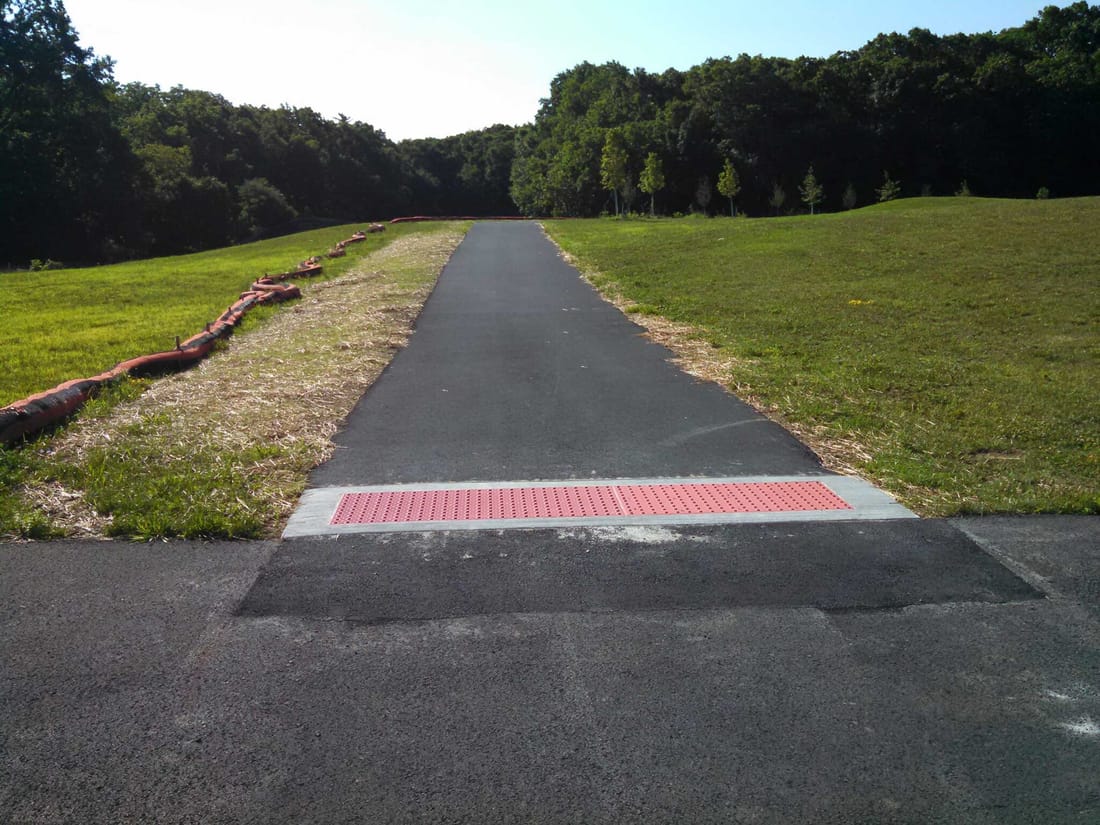
Accessibility matters in Reno, especially for schools, medical offices, and any site with public access. We can design asphalt sidewalks and paths to align with ADA guidelines where required, which may involve gentle slopes, landing areas, and correctly shaped curb ramps. During planning, we point out where existing grades or structures might fight you on accessibility, so you can address those issues before construction rather than after the fact.
What Drives Cost and Common Problems We Prevent
On asphalt pathway paving projects, we see the same cost drivers come up over and over. The first is access. If we can reach the area directly with our paver and trucks, your price per foot is lower. If the path winds behind buildings, through tight side yards, or up steep slopes, we may need more hand work, smaller equipment, and extra labor, which raises cost.
Path width and thickness matter as well. A narrow 3 foot garden path built at pedestrian thickness is far less material than an 8 foot shared use trail built strong enough for maintenance trucks and utility carts. Soil conditions can also change your budget. Sandy or well drained ground may only need a modest base. Soft clay, poorly compacted fill, or areas that see constant irrigation may require thicker aggregate, fabric stabilization, or underdrains to keep the pavement from settling and cracking.
Most of the problems we fix on older Reno pathways trace back to poor base prep or ignoring drainage. We are often called to repair paths that have sunken edges, deep puddles, or long alligator cracks after only a few years. In many of those cases, someone paved directly over topsoil or decomposed granite with minimal compaction, or they followed a grade that sends water straight down the center of the path.
Our approach is to find those issues in planning. If a section is over tree roots, we discuss options such as slight rerouting or thicker base and flexible layout to reduce heaving. In areas where snow is always piled, we may recommend stronger pavement or different layout so the snow stack does not sit on the same weak spot every winter. By talking openly about these tradeoffs, you can decide where to invest now so you are not rebuilding sections in a short time.
Why Local Experience Matters for Reno Pathway Projects
Reno’s combination of altitude, dry air, and sharp temperature changes is tough on any paved surface, especially narrow paths and sidewalks. Precision Asphalt Reno has worked on pathways throughout Reno, Sparks, and nearby areas, which means we have seen how different designs and materials perform over several winters, not just how they look on day one. That experience feeds directly into the recommendations we give you.
We understand details that are specific to this area, such as how irrigation overspray from Tahoe style landscaping can chew up the edge of a path if it is built flush with soft soil, or how snow removal on shared use trails around HOAs can dig into thin or underbuilt pavement. When you tell us how you plan to maintain the path, we plan thickness and layout accordingly so you are not frustrated later by ruts or plow damage.
Because we are local, scheduling is handled with our weather patterns in mind. We avoid paving pathways when overnight lows are too cold for proper curing, and we keep an eye on afternoon thunderstorms that can hit fast in late summer. If a weather shift forces a change, we coordinate with you so open trenches or unpaved sections do not sit longer than necessary.
From the first walk of your property to the final compaction pass, you deal with a local crew that knows Reno neighborhoods, soil quirks, and city standards. Whether you need a curved walkway through a small backyard, a network of asphalt trails around a new subdivision, or replacement sidewalks along a commercial frontage, we focus on building surfaces that feel right to walk on today and hold up through many Northern Nevada seasons.